

Why Does My Child Need a Dental Crown and Is It Really Necessary?
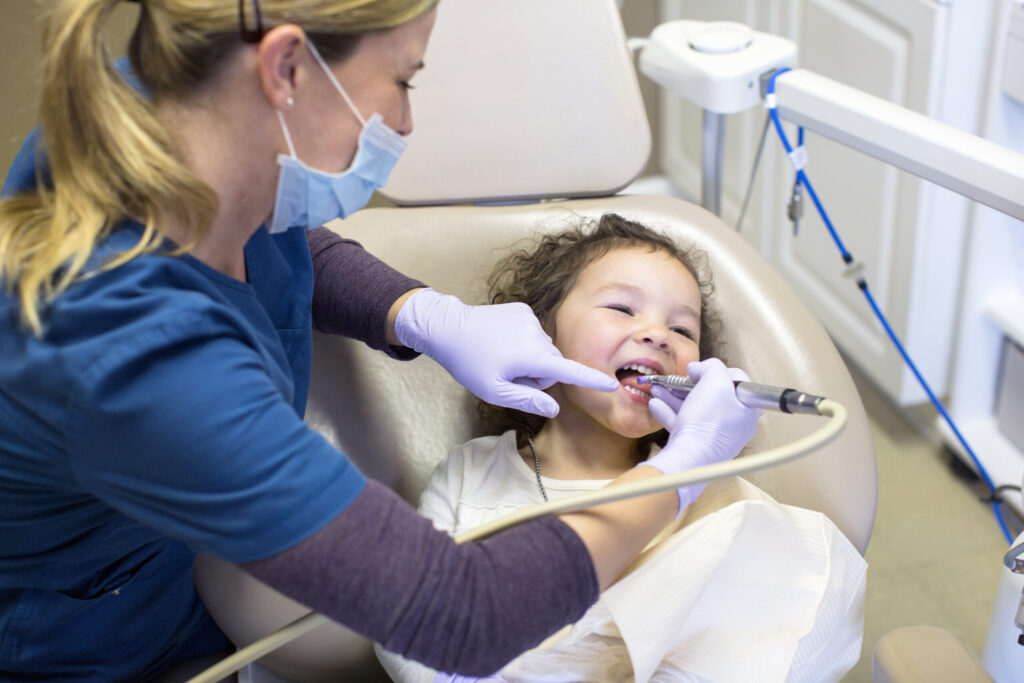
Why Would My Child Need a Crown on a Baby Tooth? This is one of the most common questions parents ask, and it makes complete sense. If baby teeth fall out on their own, why go through the trouble of putting a crown on one again!
A baby tooth that looks small may still have years left before it falls out naturally. And if that tooth is broken, severely decayed, or infected, leaving it untreated can cause real problems: pain, difficulty eating, early tooth loss, and even damage to the permanent tooth developing just below it.
Baby teeth are not just placeholders. They guide your child’s speech development, help them chew properly, and hold the space in the jaw for the adult teeth coming in behind them. When a damaged baby tooth goes unprotected, the consequences often follow your child well past the preschool years.
Dental crowns are not a sign of something going wrong. They are a sign of something being done right, before a small problem becomes a much larger one. The American Academy of Pediatric Dentistry (AAPD) recognizes stainless steel tooth caps as the standard of care for restoring severely decayed or damaged primary teeth. They are durable, reliable, and built to last right up until the tooth falls out naturally.

Dr. Kurt M. Halum – Our Experienced Dentist in Highland
At Kurt M. Halum, DMD, P.C., Dr. Halum takes the time to explain every recommendation clearly so parents feel confident, not confused. If a crown has been suggested for your child, this guide will explain exactly why it matters and what to expect.
Situations Which Calls for a Crown on a Primary Tooth
Not every cavity requires a tooth cap. But there are specific situations where a tooth cap is the right call, and a simple filling simply won’t hold up.
- The decay covers two or more surfaces of the tooth
- The tooth has undergone nerve treatment (pulpotomy)
- The tooth is cracked, broken, or structurally weakened
- The child is very young, and the tooth has many years before it falls out naturally
- The decay is so extensive that little healthy tooth structure remains
In these situations, a filling is likely to fail. It doesn’t have enough teeth to bond to, and the stress of chewing breaks it down faster. A dental cap covers the entire tooth, providing full protection in all directions.
Why Stainless Steel Crowns Are the Go-To Option?
When parents hear the word “crown,” they sometimes imagine a major procedure. In pediatric dentistry, it’s much more routine than that.
Stainless steel crowns (silver caps) have been used in children’s dentistry since 1950. They are pre-formed, fitted directly over the tooth, and cemented in place, often in a single visit. The AAPD guidelines support their use because decades of clinical evidence show they outperform fillings in durability, especially on primary molars.
Here’s why they work so well for kids:
- They are the most durable material in pediatric dentistry
- They cover the full tooth, sealing out bacteria completely
- They require less tooth removal than other options
- They hold up through years of chewing without breaking down
- They fall out naturally when the baby tooth is ready to come out
Families in Highland trust stainless steel caps as the most reliable option for dental crowns for kids, and Dr. Halum places them routinely in a single visit at Kurt M. Halum, DMD, P.C. to protect those teeth from natural exfoliation.
What Happens When a Damaged Baby Tooth Is Left Alone?
Some parents choose to wait it out, hoping the tooth will fall out before things get worse. Unfortunately, that rarely happens.
Decay moves fast in primary teeth. The enamel on baby teeth is thinner than on adult teeth, which means bacteria can reach the inner layers more quickly. Once the infection reaches the root, it can spread to the gum, the jawbone, and even the developing permanent tooth underneath.
An untreated infected baby tooth doesn’t just hurt; it can knock a child’s incoming adult tooth off track, cause lasting alignment issues, and sometimes require an extraction. Losing a baby tooth too early often means the surrounding teeth shift into the gap, creating crowding that can lead to orthodontic treatment down the road. A tooth cap stops that chain of events before it starts.
Is the Crown Procedure Comfortable for Kids?
This is a fair concern, especially for younger children. The good news is that placing a tooth cap on a primary tooth is a well-practiced procedure in a pediatric dental setting.
The tooth and the surrounding area are numbed before anything begins. Most children tolerate the appointment well, particularly in an office that focuses exclusively on kids. A child-focused environment makes a significant difference, from the way staff communicate to the way the room feels.
After the appointment, some children experience mild tenderness around the tooth for a day or two. An over-the-counter children’s pain reliever is usually all that’s needed. Most kids bounce back quickly and return to eating normally within a short time.
Parents who visit our Highland office often find that choosing a pediatric dentist makes all the difference, and the appointment is far less stressful than expected at Kurt M. Halum, DMD, P.C., where everything is designed with kids in mind.
How Long Does the Crown Last?
These restorations are designed to last the lifetime of the baby tooth. They don’t crack, chip, or stain. They hold up through years of normal chewing and eating. When the time comes for that tooth to fall out, the crown comes with it, no removal needed.
Parents sometimes worry about appearance, since stainless steel tooth caps are silver-colored. On back molars, they are rarely visible during normal conversation or smiling. For front teeth, tooth-colored options are available. Dr. Halum can walk you through which option fits your child’s situation.
Protect Your Child’s Smile, Right Here in Highland
You don’t have to figure this out on your own. If your child has a tooth that looks damaged, has been bothering them, or a dentist has already mentioned a crown, the next step is a straightforward conversation.
Kurt M. Halum, DMD, P.C. serves families throughout Highland, Munster, Dyer, Schererville, and the surrounding Northwest Indiana communities. Dr. Halum and the team focus entirely on children, from infants through teens, and the office is designed to make kids feel comfortable from the moment they walk in.
Visit our dental office, reach us at (219) 924-5437 or Book an appointment today and give your child the smile and protection that it deserves.
Frequently Asked Questions
-
Why does my child need a crown if the tooth is just going to fall out anyway?
Baby teeth can remain in your child’s mouth for several more years. During that time, a damaged tooth can become infected, cause pain, and affect the adult tooth developing underneath it. A crown protects the tooth until it falls out naturally, preventing those complications.
-
What type of crown do pediatric dentists use on baby teeth?
Stainless steel crowns are the most commonly used option for primary molars. They are durable, placed in a single visit, and recommended by the AAPD as the standard of care for heavily decayed or nerve-treated primary teeth. Tooth-colored options are available for front teeth.
-
Will my child feel pain during the crown placement?
The area around the tooth is numbed before the procedure begins. Most children handle it well with minimal discomfort. Some mild soreness after the appointment is normal and usually resolves within a day or two.
-
What happens if I choose not to get the crown and just wait?
Leaving a damaged or severely decayed tooth untreated often leads to infection, abscess, or extraction. Early tooth loss can cause neighboring teeth to shift, leading to crowding and potential orthodontic issues later. Treating the tooth now is almost always the simpler path.
-
How long will the crown stay on my child’s tooth?
Stainless steel crowns are built to last the full lifetime of the baby tooth. When the tooth is ready to fall out, the crown comes with it naturally. No removal procedure is needed.
-
Are dental crowns covered by insurance for primary teeth?
Many dental insurance plans cover crowns on primary teeth, especially when they follow a nerve treatment or involve extensive decay. Coverage varies by plan. The dental team is happy to check your benefits and walk you through any out-of-pocket costs before treatment begins.