

Dental Sealants for Kids: Why It’s a Must for Cavity Prevention?
Every parent wants to see their child grow up with a healthy, confident smile. You remind them to brush, encourage them to floss, and do your best to limit sugary snacks and drinks. Even with those habits in place, though, some parts of a child’s teeth can be difficult to clean.
That is where dental sealants for kids can help. Sealants are thin protective coatings placed on the chewing surfaces of back teeth. They help cover the tiny grooves where food, plaque, and bacteria can collect, supporting better protection against cavities.
For families in Highland, IN, dental sealants can be a simple part of a larger approach to kids cavity prevention and long-term oral health.
Why Are Kids More Likely to Get Cavities in Their Molars?
Children’s molars are designed for chewing, which means they have natural pits and grooves across their surfaces. While these grooves are normal, they can also make brushing more challenging.
A toothbrush may clean the visible surface of a tooth without reaching deep into every narrow groove. Food particles and bacteria can remain behind, increasing the risk of decay over time.
This is one reason sealants on molars are commonly recommended for children. They help create a smoother protective surface, making it harder for cavity-causing bacteria to settle into those deep areas.
According to the American Dental Association, sealants are an established preventive option that can help protect the chewing surfaces of teeth from cavities.
What Are Dental Sealants for Kids?
Dental sealants for kids are thin coatings applied directly to the chewing surfaces of teeth, usually the molars and sometimes premolars. The treatment does not change the natural function of the tooth. Instead, it adds a protective barrier over areas that may be harder to clean.
How Dental Sealants Work
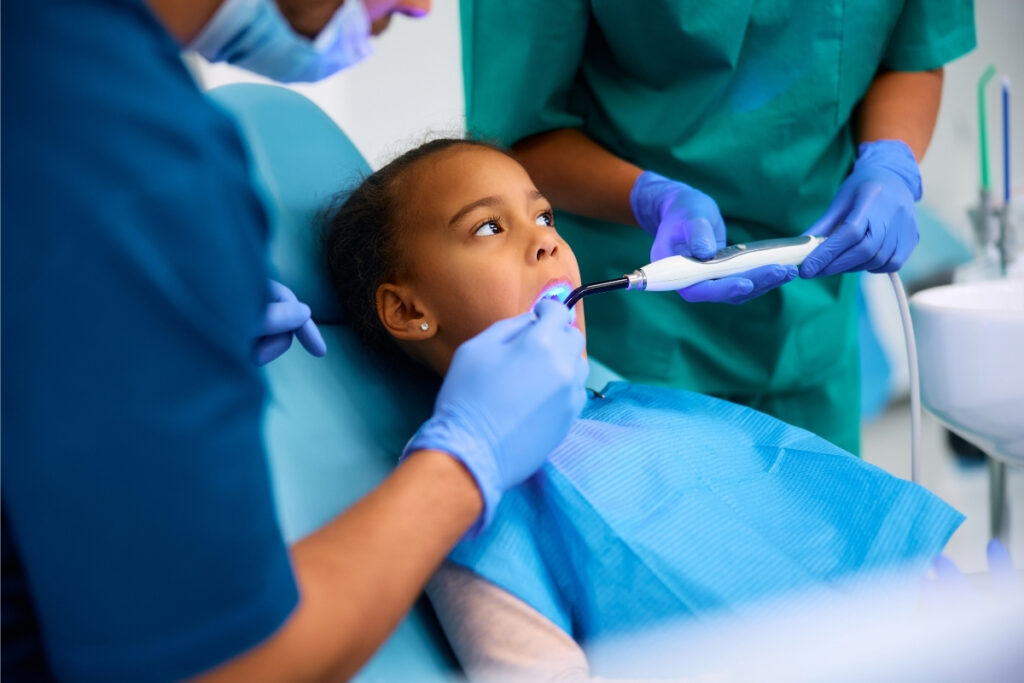
Understanding how dental sealants work is fairly simple. The tooth is cleaned and prepared, and the sealant material is placed over the chewing surface. It flows into the small pits and grooves before being hardened.
Once the sealant is in place, it acts as a barrier between the tooth surface and the food and bacteria that can contribute to decay.
Think of it as making a rough, difficult-to-clean surface smoother and easier to protect.
What Do the Numbers Tell Us About Sealants?
Research on children’s oral health has consistently shown that cavities remain a common concern, particularly in the back teeth. Molars are more likely to develop decay because their grooves can trap bacteria and food.
Public health data has also shown that sealants can significantly lower the risk of cavities on the chewing surfaces of permanent molars. The takeaway for parents is practical: brushing remains essential, but brushing alone may not always clean every deep groove effectively.
Sealants add another layer of protection. When combined with good daily habits, they can play an important role in cavity prevention for children.
When Should Children Get Dental Sealants?
Many children receive sealants after their permanent molars come in. The first permanent molars often erupt around age 6, while the second set commonly appears around age 12.
These teeth can benefit from early protection because they have deep grooves and may be difficult for children to clean thoroughly.
The right timing depends on your child’s teeth and cavity risk. During a routine visit, a dental professional can check whether pediatric dental sealants would be appropriate.
Benefits of Dental Sealants
The benefits of dental sealants can make them a useful addition to a child’s preventive dental care routine.
They Help Protect Vulnerable Teeth
Sealants cover the pits and grooves where cavities often begin, especially on back teeth.
The Process Is Simple
Applying sealants is generally quick and comfortable. In most cases, there is no drilling or removal of healthy tooth structure.
They Support Daily Oral Hygiene
Sealants do not replace brushing or flossing, but they can help protect areas that are naturally more difficult to clean.
They Can Last for Years
Sealants can remain effective for years and can be checked during regular dental visits. If one becomes worn or damaged, it may be repaired or replaced.
For parents thinking about kids cavity prevention, this preventive step may help reduce the chances of needing more extensive treatment later.
Do Kids Still Need to Brush and Floss?
Yes. Sealants are helpful, but they only protect the surfaces where they are placed.
Children should continue to:
- Brush twice a day with fluoride toothpaste
- Floss between teeth that touch
- Attend regular dental checkups
- Limit frequent sugary snacks and drinks
- Follow personalized recommendations for preventive care
The best approach to cavity prevention for children is not relying on one treatment. It is about combining healthy habits with preventive dental care.
Should You Consider Sealants for Your Child?
If your child has recently developed permanent molars, has deep grooves in their teeth, or has a history of cavities, it may be worth asking about dental sealants.
Parents searching for a pediatric dentist near me may also want to ask whether the practice provides preventive treatments such as sealants and cavity-risk evaluations.
For families in Highland, IN, a routine dental visit can help determine whether sealants for children’s teeth are a good fit for your child’s needs. Every child has different oral health habits and risk factors, so an individual evaluation is important.
A Simple Step Toward a Healthier Smile
Cavities can sometimes develop even when parents are doing their best to encourage good brushing habits. That does not mean those habits are not working. It simply means some areas of the mouth need extra attention.
Dental sealants for kids offer an additional layer of protection for the deep grooves found on molars. Combined with brushing, flossing, healthy food choices, and regular dental visits, they can support a stronger approach to protecting your child’s smile.
At Kurt M. Halum, DMD, P.C., families can discuss preventive options based on their child’s individual oral health needs. A small preventive step today may help support a healthier smile as your child grows.
Frequently Asked Questions
Are dental sealants safe for children?
Dental sealants are widely used as a preventive dental treatment for children. A dental professional can discuss whether they are appropriate for your child’s specific needs.
Do dental sealants hurt?
No. Applying sealants is generally a comfortable and painless process. It usually does not require drilling or anesthesia(opens in new tab).
How long do dental sealants last?
Sealants can last for several years. They should be checked during regular dental visits and may be repaired or replaced if they become worn or damaged.
What teeth usually get sealants?
Sealants are most commonly placed on molars because these teeth have deep grooves that can be difficult to clean.
Can sealants replace brushing?
No. Sealants work alongside brushing and flossing. Children still need good daily oral hygiene to protect all surfaces of their teeth.
At what age should kids get dental sealants?
Many children may benefit when their permanent molars erupt, often around ages 6 and 12. The best timing depends on the child’s individual oral health.
Are sealants only for children?
No. While sealants are commonly used for children and teenagers, some adults with deep grooves and a higher risk of cavities may also benefit.
How can I find a pediatric dentist near me for sealants?
When searching for a pediatric dentist near me, look for a dental office that provides preventive care and evaluates your child’s individual risk for cavities and tooth decay.