

How Do Space Maintainers Work for Children?
Losing a baby tooth earlier than expected can leave parents with several questions. You might assume the permanent tooth will eventually grow into its place without any problems. However, when a child loses a baby tooth too soon, the neighboring teeth may begin moving into the empty space. This movement can affect how the permanent tooth comes in.
That is where space maintainers for children can help. These small dental appliances hold the space left by a missing baby tooth until the permanent tooth is ready to erupt. They help guide dental development and reduce the risk of certain alignment problems.
For parents in Highland, IN, understanding how these appliances work can make decisions about their child’s dental care easier. If you have been searching for a pediatric dentist near me, knowing when a space maintainer may be necessary is a helpful starting point.
Let’s look at how space maintainers work, which types are available, and how parents can help children care for them.
What Are Space Maintainers for Children?
A space maintainer is a dental appliance that keeps an open space in a child’s mouth after the premature loss or extraction of a baby tooth. It prevents nearby teeth from shifting into that area before the permanent tooth arrives.
Baby teeth do more than help children chew and speak. They also guide permanent teeth into their proper positions. When a baby tooth falls out naturally at the right time, the permanent tooth usually follows its expected eruption pattern.
However, losing a tooth too early can change that process.
For example, if a child loses a baby molar several years before the permanent premolar is ready to emerge, the neighboring teeth may gradually move toward the empty space. This can leave insufficient room for the permanent tooth.
Pediatric dental space maintainers help preserve that room during the child’s growth.
How Do Space Maintainers Work?
Parents often ask, how do space maintainers work and why does a child need one after losing a baby tooth?
The principle is simple. The appliance occupies or spans the space left by the missing tooth, preventing nearby teeth from drifting into it.
Here’s how the process generally works:
The Dentist Examines the Missing Tooth Area
First, the dentist checks the child’s teeth, gums, bite, and overall dental development. They may use dental X-rays to see the position of the developing permanent tooth and estimate how much time remains before it erupts.
Not every early tooth loss requires an appliance. The decision depends on the child’s age, which tooth is missing, the space available, and the stage of permanent tooth development.
The Appropriate Appliance Is Selected
If a space maintainer is necessary, the dentist chooses a design based on the location of the missing tooth and the child’s dental needs.
Some appliances attach to one tooth, while others connect to several teeth or sit in specific areas of the mouth.
The Appliance Holds the Space
Once fitted, the appliance helps prevent neighboring teeth from moving into the gap. It does not pull teeth into alignment or actively straighten the bite.
Instead, it preserves the room needed for the permanent tooth to emerge.
The Dentist Monitors Dental Development
The child will need periodic dental visits to check the appliance, surrounding teeth, and permanent tooth eruption.
When the permanent tooth approaches the appropriate stage of eruption, the dentist can determine when to remove the space maintainer.
What Are the Different Types of Dental Space Maintainers?
The right appliance depends on the child’s age, tooth location, and dental development. Most space maintainers fall into two main categories: fixed and removable.
Fixed Space Maintainers
Fixed appliances stay attached to the teeth and cannot be removed by the child.
- Common examples include:
Band-and-loop: A metal band fits around a neighboring tooth, with a loop extending across the empty space. It is commonly used when a single baby molar is lost early. - Crown-and-loop: A stainless steel crown covers a supporting tooth, while a metal loop preserves the space. It may be appropriate when the supporting tooth also needs protection.
- Lingual holding arch: This appliance connects the lower back teeth with a wire positioned along the inside of the lower teeth. It can help maintain space when multiple baby teeth are missing.
- Distal shoe: This specialized appliance helps guide the first permanent molar when a second primary molar is lost before that permanent tooth erupts. It requires careful monitoring.
Removable Space Maintainers
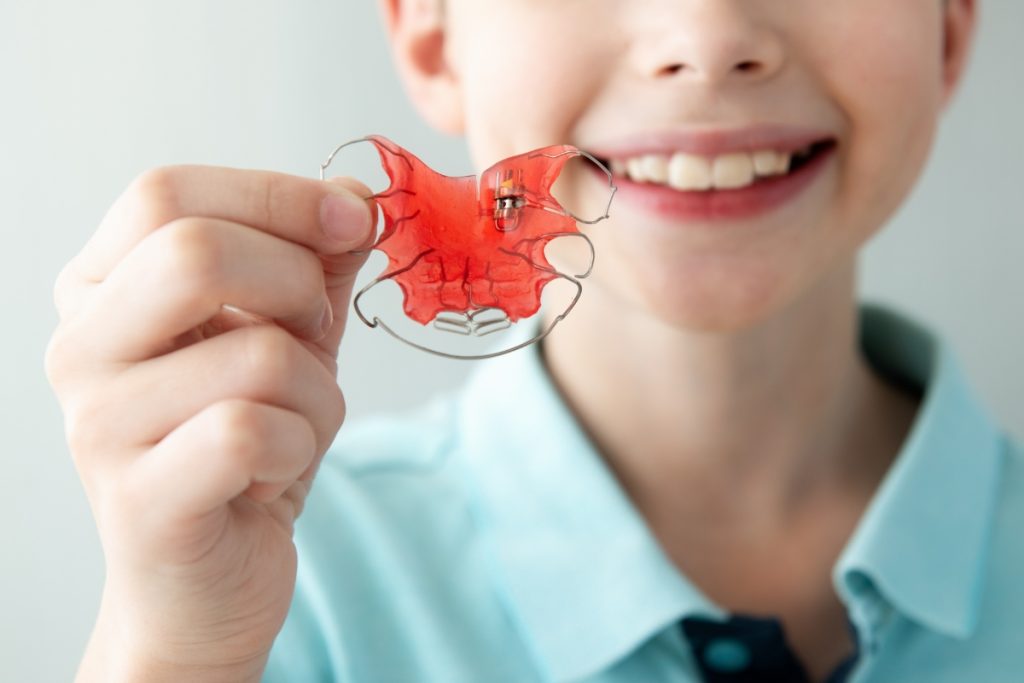
Removable appliances resemble small dental retainers or partial dentures. They may contain plastic and metal components and can sometimes replace more than one missing baby tooth.
However, children must wear them as instructed and keep them clean. They may not suit very young children or children who struggle to follow appliance-care instructions.
Your child’s dentist can explain which option offers the most appropriate support.
What Are the Benefits of Space Maintainers for Children?
Space maintainers for kids serve an important purpose during the transition from baby teeth to permanent teeth.
Some potential benefits include:
- Preserving available space: They help prevent neighboring teeth from drifting toward an empty area.
- Supporting normal eruption: They maintain room for the developing permanent tooth to emerge.
- Reducing certain alignment concerns: Preserving space may lower the risk of crowding caused by premature tooth loss.
- Supporting bite development: Maintaining appropriate spacing can help reduce some complications involving tooth positioning.
- Helping with future treatment planning: Avoiding preventable space loss may reduce the need for additional orthodontic intervention in some children.
It is important to understand that space maintainers do not guarantee perfectly straight permanent teeth. Genetics, jaw growth, and other developmental factors also influence alignment.
How Should Parents Care for Space Maintainers?
Good daily habits help keep the appliance clean and functioning properly.
Here are some practical tips:
Maintain Regular Brushing
Encourage your child to brush twice daily with fluoride toothpaste. Pay special attention to the teeth supporting the appliance and the areas around its metal components.
Avoid Sticky and Hard Foods
Caramel, chewing gum, hard candies, ice, and very sticky snacks can loosen or damage certain appliances.
Choose softer foods when needed and encourage children to chew carefully.
Watch for Changes
Check occasionally for loose bands, broken wires, irritation, or food trapped around the appliance. Contact the dental office if something feels unusual.
Never try to bend or repair a damaged appliance at home.
Keep Regular Dental Appointments
Follow-up visits allow the dentist to check whether the appliance remains secure and whether the permanent tooth is developing as expected.
These appointments also help determine when the appliance is no longer necessary.
When Does a Child No Longer Need a Space Maintainer?
A space maintainer usually stays in place until the permanent tooth begins erupting into the space it was designed to protect.
However, removal timing varies. It depends on the tooth involved, the child’s development, and the position of the incoming permanent tooth.
Removing the appliance too early may allow neighboring teeth to shift again. Keeping it in place longer than necessary may interfere with eruption or cause unwanted irritation.
The dentist monitors these changes and recommends removal at the appropriate time.
For families in Highland, IN, Kurt M. Halum, DMD, P.C. can help assess early baby tooth loss and determine whether a space maintainer is appropriate for your child’s developing smile. If your child has lost a baby tooth before its expected time, a dental evaluation can help identify the next steps. Schedule an appointment to discuss your child’s dental development and treatment needs.
Helping Your Child Maintain Healthy Dental Development
Baby teeth play an important role in guiding permanent teeth into their expected positions. When a child loses one too early, a space maintainer may help protect the available room and support normal dental development.
Understanding the available options, maintaining good oral hygiene, and attending regular dental checkups can make appliance treatment easier for children and parents.
The American Dental Association also provides helpful information about baby teeth and children’s oral health.
If you have questions about early tooth loss or whether your child needs a space maintainer, Kurt M. Halum, DMD, P.C. can help evaluate your child’s dental development in Highland, IN. A timely dental assessment can help you plan the next steps for your child’s growing smile.
Frequently Asked Questions
Are space maintainers necessary for every child who loses a baby tooth early?
No. Some children have enough room for their permanent teeth to erupt naturally. The dentist considers the child’s age, missing tooth location, dental development, and available space before recommending an appliance.
Are dental space maintainers painful for children?
Space maintainers generally do not cause pain during normal use. A child may experience mild pressure or temporary discomfort when first getting used to the appliance. Persistent soreness or irritation should be checked by the dentist.
How long does a child need to wear a space maintainer?
The duration varies depending on the missing tooth and the development of the permanent tooth. Some children need an appliance for several months, while others may need it for longer. Regular dental examinations help determine the right removal time.
Can children eat normally with space maintainers?
Yes. Most children can eat a regular diet with some adjustments. Avoiding sticky, chewy, and hard foods helps prevent damage or loosening. The dentist may recommend additional dietary precautions based on the appliance.
What happens if a child does not get a space maintainer?
If a space maintainer is necessary but not used, neighboring teeth may shift into the empty space. This can reduce the room available for the permanent tooth and potentially contribute to crowding or eruption problems. However, not every early tooth loss causes these issues.